Open Source CRM: Own Your Data, Code, and CRM Roadmap
You’re here because you want control. You want the open source CRM experience: to self-host, own every record, and change the system when your business changes — without begging a vendor or blowing up your stack.
The cost of not having that control is real. Closed SaaS CRMs create vendor lock-in, surprise price hikes, rigid roadmaps, and compliance uncertainty. On the other side, stitching together a free open source CRM often means months of setup, plugin hunting, and patching — time your team should spend closing deals, not fixing dependencies.
Common failure modes you’ve likely seen:
- Data trapped in a third-party cloud with unclear residency or export paths
- A fragile web of community plugins for fundamentals like telephony, quotes, and automation
- One update breaks three extensions; you fork code and upgrades stall for quarters
- No single accountable vendor when something critical fails at quarter-end
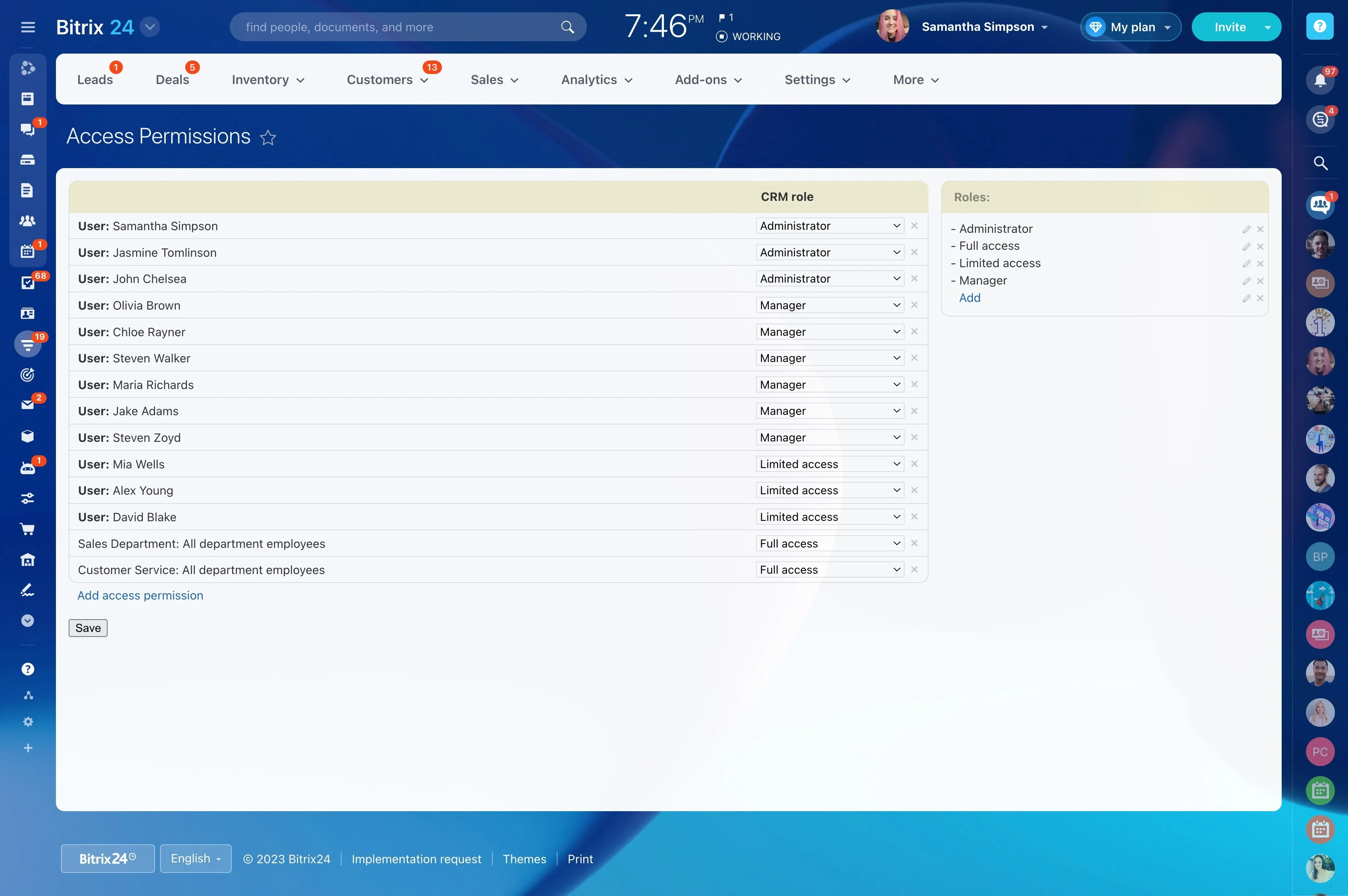
Bitrix24 Self-hosted gives you what you actually want: a self-hosted CRM with full source code access under a commercial license, low-code automation for speed, and a complete collaboration suite in one stack. You get open source-level freedom — without DIY fragility. You host it. You own the data. You can modify business logic and UI when needed. And you keep shipping because the core platform is already complete.
Proof in practice: common needs solved out of the box
Your team operates from a single platform where the CRM isn’t just a database — it’s the place where work happens, from first touch to renewal.
- Omnichannel capture: Use forms, live chat, telephony, WhatsApp, Facebook, Instagram, and email queues unified through Open Channels. Every interaction lands on a single CRM timeline…
- Quote‑to‑cash: Build products and bundles with price rules, taxes, and discounts. Generate quotes with templates and approvals triggered by discount thresholds. Send for e‑signature…
- Territory sales: Define regions, queues, and shift calendars. Combine round‑robin with capacity caps and after‑hours routing. Lock pipeline stages to enforce playbooks, and use…
- Service SLAs: Categorize tickets, set response/resolve timers, and automate escalations. Expose a client portal for status updates and knowledge base access. Tie CSAT surveys to…
More than open source: CRM plus collaboration in one stack
Open source CRM software often starts lean — then grows into a patchwork of plugins and side tools.
Included out of the box:
- CRM: leads, deals, accounts, products, quotes, invoices, recurring deals, forecasting, and Smart Process Automations for custom entities.
- Contact Center: telephony, website live chat, messengers, social DMs, and email queues unified in one inbox (Open Channels) with routing, SLAs, and transcripts stored on the CRM…
- Marketing: segments, campaigns, email/SMS, journey builder, forms, and landing pages tied directly to CRM data.
- Service: tickets, knowledge base, client portal, SLAs, automations, and satisfaction tracking — linked to customer history.
Want open source? Get control without the compromise
When you search for the best open source CRM, you’re optimizing for three outcomes: data ownership, deep customization, and predictable long‑term control.
Where teams get burned:
- Feature gaps force plugin sprawl. You bolt on telephony, omnichannel chat, quotes, advanced automation, SLA tracking — each from a different author with its own roadmap and support.
- Updates become roulette. A minor core release deprecates a hook; two plugins break; your forked fixes now diverge from upstream. Suddenly, security patches require a sprint and a…
- Support is nowhere and everywhere. GitHub issues, forum threads, Discord chats — yet no accountable owner when phone lines drop or quote PDFs fail the morning of a renewal.
- TCO creeps up. Engineer months on setup and hardening. Paid tiers for key plugins. Unplanned downtime. A brittle graph of dependencies you’re scared to touch.
Self‑hosted CRM that respects data sovereignty
If you answer to customers, a board, or a regulator, data location and handling are non‑negotiable.
A typical scenario: Your legal team requires EU‑only storage, strict least‑privilege access, and monthly audit evidence.
- Infrastructure choice: Deploy on‑premises, in your private cloud, or with a regional provider to meet data residency expectations. Keep primary and replica nodes in jurisdiction.
- Encryption: Manage encryption at rest on your systems (full‑disk or database‑level), and enforce TLS/HTTPS for data in transit. Rotate certificates and keys on your schedule.
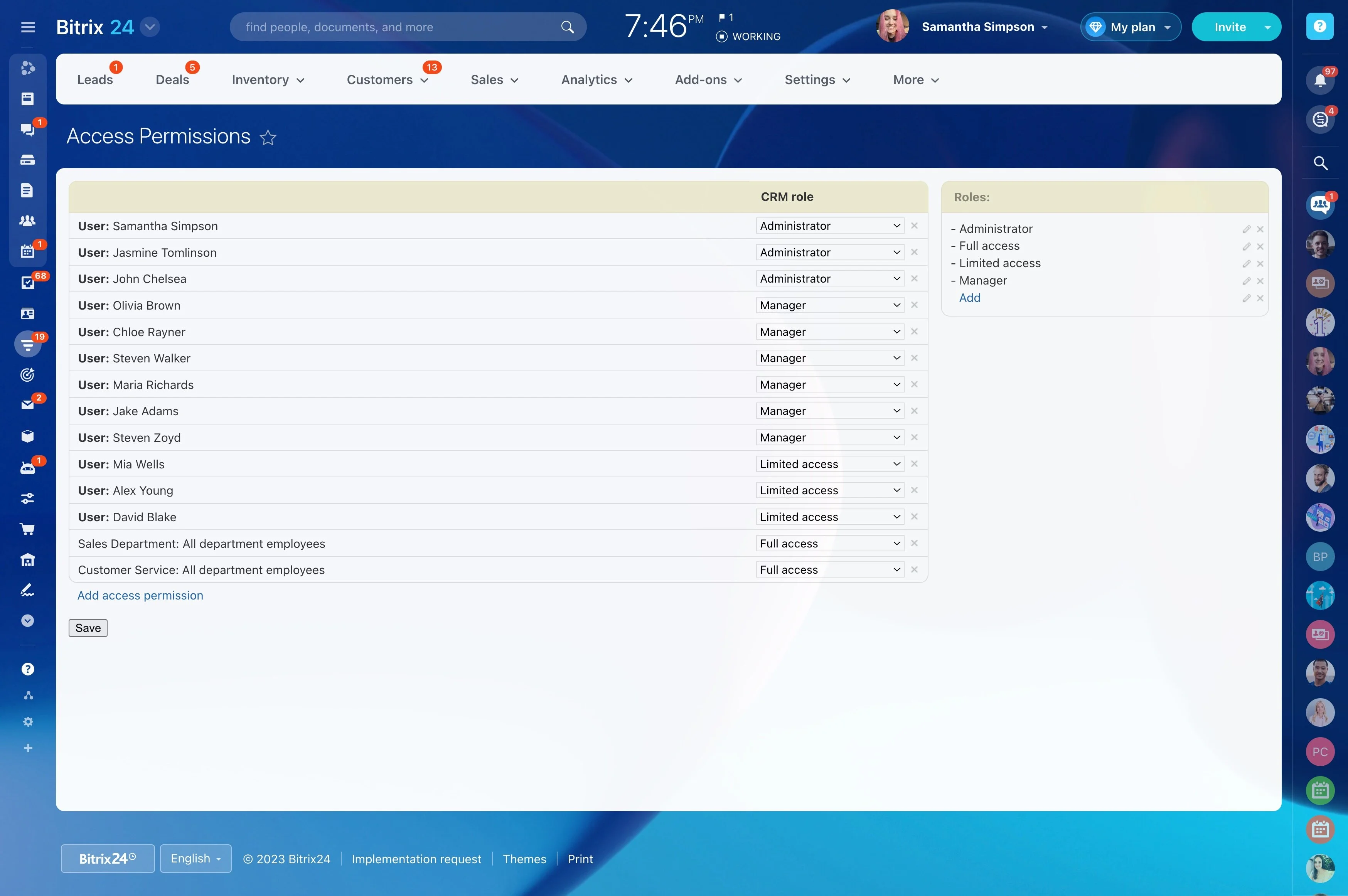
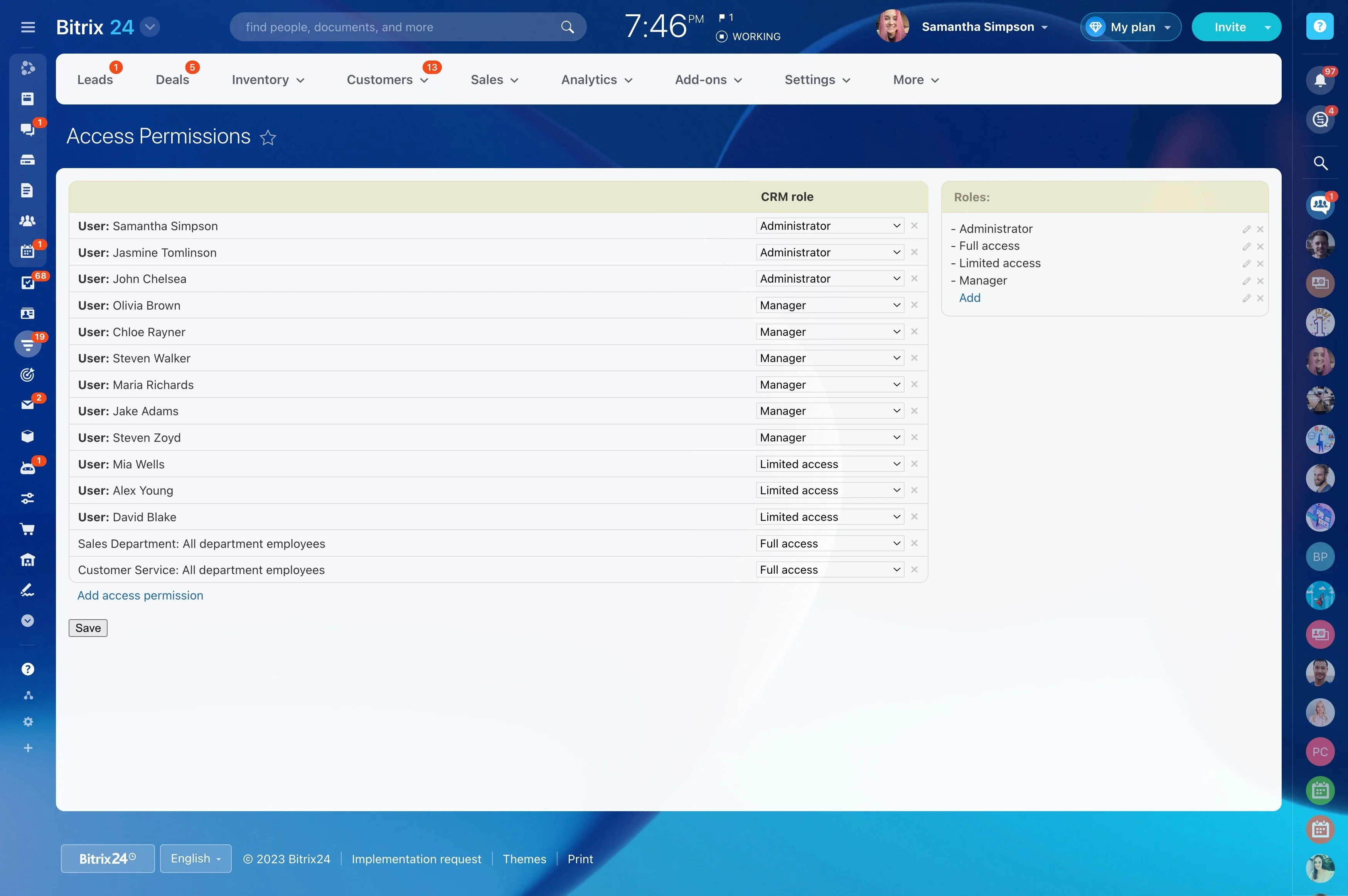
- Access scope: Use role‑based permissions to control visibility down to fields and records. Limit managers to their teams and regions. Hide sensitive fields (e.g., pricing tiers)…
- Identity and auth: Integrate with LDAP/Active Directory for centralized identity, enforce two‑factor authentication, set session policies, and gate access by IP ranges or managed…
Customize everything—without painting yourself into a corner
You need a CRM that models your business — not one that forces your business into a template.
Ways teams build safely and fast:
- No/low‑code: Use the visual business process designer, deal/lead automation robots and triggers, conditional routing, and webhooks to orchestrate handoffs without writing code.
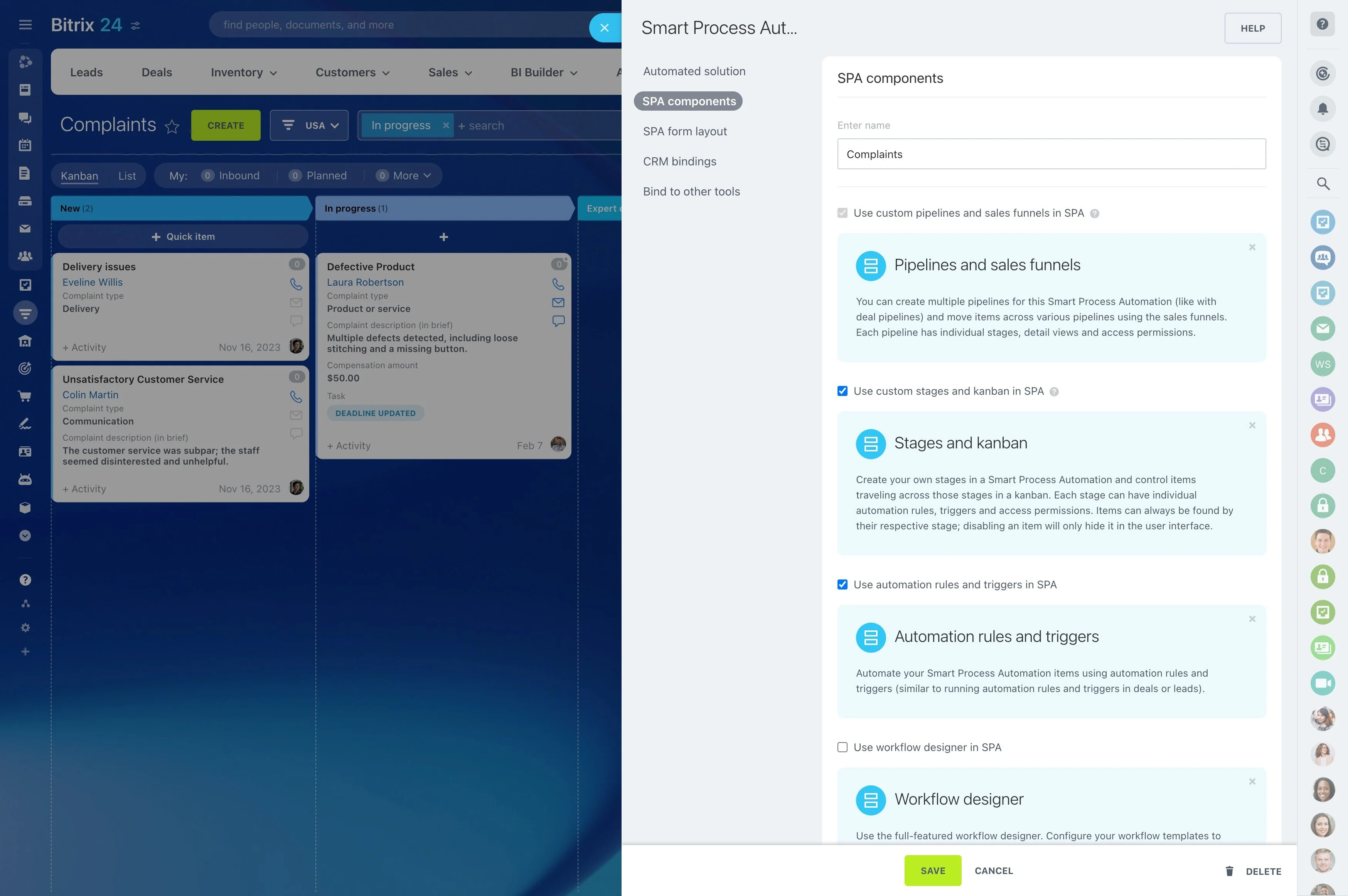
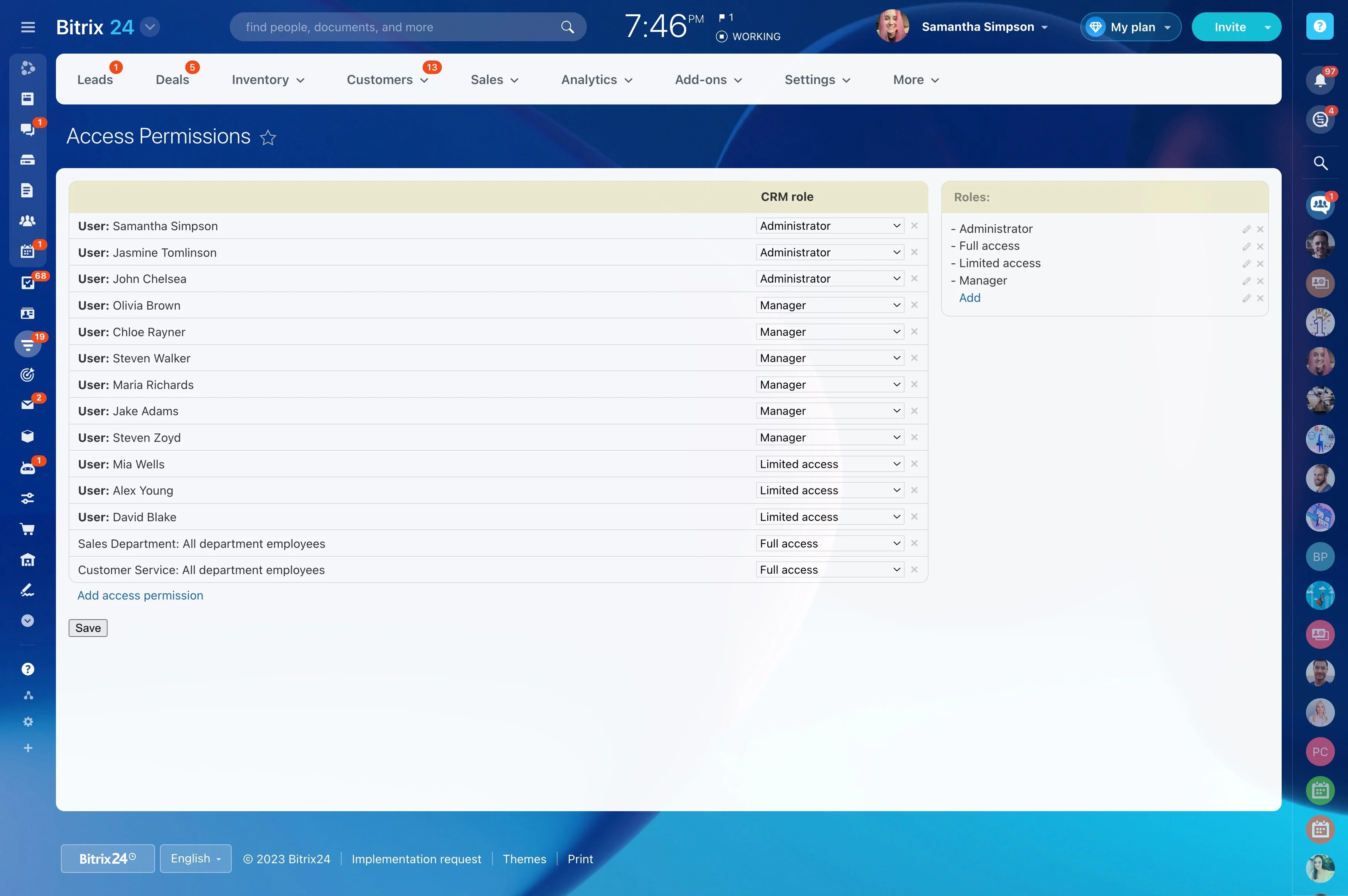
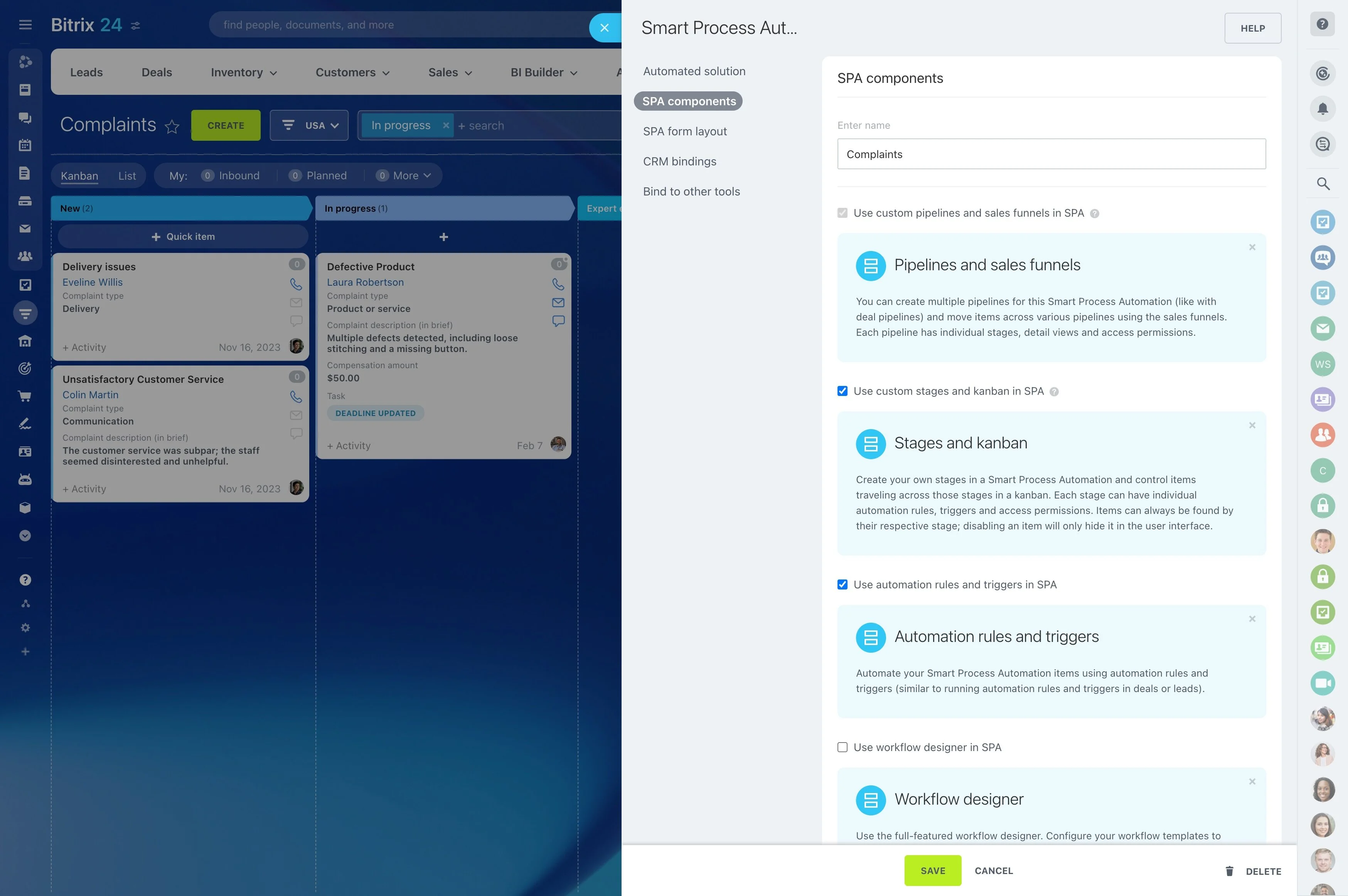
- Configuration: Create custom fields, multiple pipelines, scoring models, SLA timers, and role‑based UIs. Use Smart Process Automations to define entirely new entities with their own…
- Extensibility: Tap into REST APIs and events to react to CRM changes. Build server‑side modules in PHP and UI components in JS for bespoke logic, without forking core.
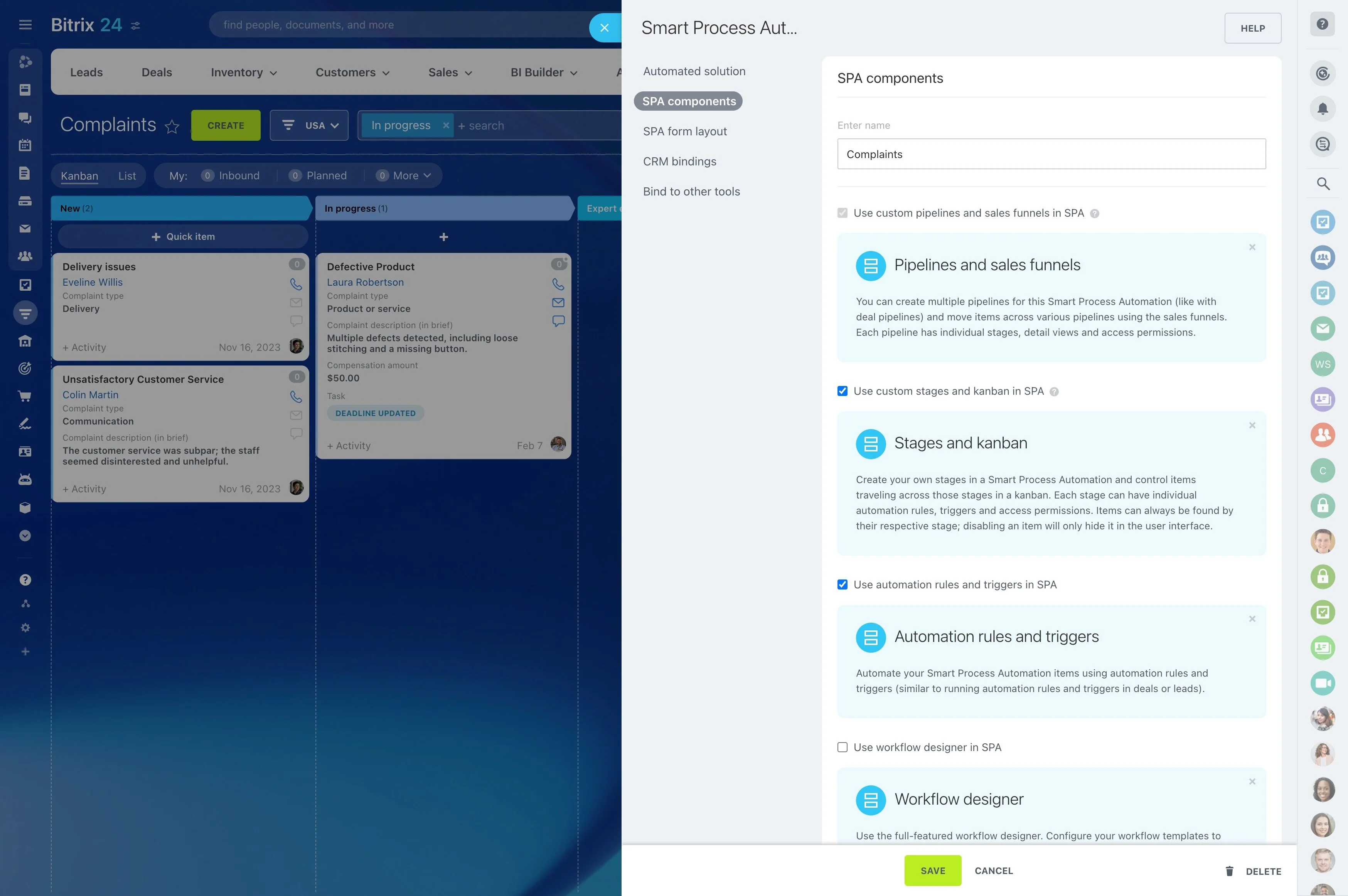
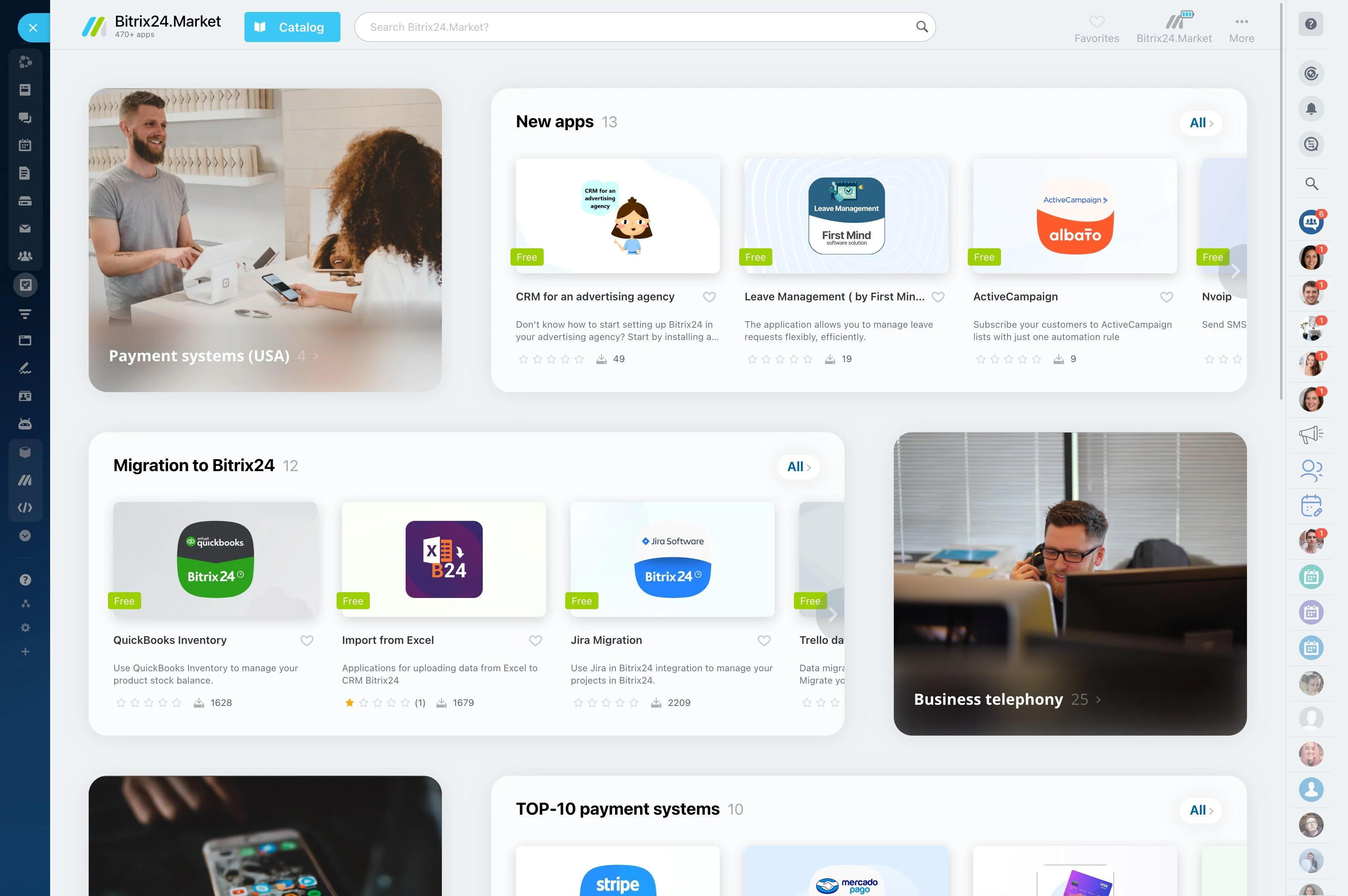
- Integrations: Connect telephony, ERP, billing, or BI via APIs and queues. Use Marketplace apps or ship in‑house modules to standardize workflows across teams.
The real cost of “free” open source CRM
A search for “free open source CRM” often starts with budget pressure.
Hidden costs you should quantify up front:
- Engineering time: Installation, server hardening, CI/CD, backups, monitoring, HA/DR, and ongoing patching. Even modest setups consume weeks. Complex ones become a quarter‑long project.
- Plugins and extensions: Must‑have features move to paid tiers. Multiply small subscriptions by 10–20 plugins and you rival a commercial license — without unified support.
- Update/compatibility risk: Every core update risks breaking custom code and community plugins. You’ll hold back on security patches because you dread regressions.
- Support delays: Forum posts and GitHub issues are not SLAs. The day your dialer fails or quotes render incorrectly, “community best‑effort” costs real revenue and reputation.
Deploy your way: on‑prem today, cloud tomorrow
Infrastructure strategies evolve.
Reference architectures for self‑hosted:
- Self‑hosted (On‑Premise): Install on your servers or private cloud. Choose the OS and web stack you standardize on. Set maintenance windows, tune performance, and scale horizontally…
- Cloud (managed): Opt for Bitrix24 Cloud plans if you prefer a managed service with automatic updates and no server administration.
- Single‑node to start: App + DB on one server for small teams. Simple backups, low overhead.
- Split tiers as you grow: Separate database server, add a cache layer, and front with a load balancer. Use SSD storage and prioritize database I/O.