The Service Delivery Handoff That Stops Context From Dying After Closed-Won

Most teams think that once a deal is marked "closed-won," the hard part is over. In reality, the most fragile phase of the client relationship starts immediately after the sale - when responsibility shifts from sales to delivery.
In practice, this transition rarely happens as cleanly as it should. The sales rep marks the deal "closed-won," updates the CRM, and moves on to the next opportunity. Somewhere in the background, a delivery team is supposed to pick up where the sales conversation left off. But nobody forwarded the notes. The client's priorities were discussed on a call that wasn't recorded. The timeline the rep promised doesn't match the delivery team's capacity. And the client? They just got a generic welcome email that sounds nothing like the tailored conversation they had with your sales team for the past three months.
This is what a failed service delivery handoff looks like - and it happens far more often than companies realize.
A service delivery handoff is the structured transfer of client context, expectations, deliverables, and ownership from a sales team to an operations or delivery team after a deal closes. It answers four questions: what was sold, who is responsible for delivery, when work begins, and what outcome the client expects. The handoff sits between the commercial promise and the operational reality. When it works, the client never notices the transition. When it breaks, trust erodes before the first deliverable is delivered.
This process matters most for B2B service firms, SaaS companies with onboarding sequences, agencies managing client projects, and consulting practices where the person who sold the engagement is not the person who delivers it. If your business model involves any gap between "deal signed" and "work started," the service delivery handoff is where that gap either gets bridged or gets dangerous.
Why Service Delivery Breaks After the Sale
The sales-to-delivery handoff fails for predictable reasons - and most have nothing to do with carelessness. The problem is structural.
Sales teams operate inside CRM pipelines. Their workflow revolves around stages, probabilities, and closing dates. Delivery teams operate inside project management tools. Their workflow revolves around tasks, milestones, and capacity. These two systems rarely talk to each other without deliberate integration. So when a deal closes, the context that lives in one system has no automatic path to the other.
Think about what a sales rep accumulates during a deal cycle: dozens of emails, call notes, proposal revisions, pricing negotiations, verbal agreements about scope, and informal commitments about timelines. Most of that knowledge sits in the rep's head or is buried in email threads. The CRM captures the deal amount, the contact name, and the stage - but not the nuance that delivery teams need to start work correctly from the start.
This is the closed-won workflow gap. The deal stage changes, the celebration happens, and then... silence. The delivery team either waits for someone to brief them or starts assembling context from scratch. Client transition from sales to operations becomes a game of telephone where critical details drop out at every step.
Three patterns make this worse. First, sales teams are incentivized to move on quickly, as their compensation is tied to closing rather than to delivery quality. Second, delivery teams often don't have CRM access and work in separate tools with different logins. Third, clients assume the handoff has already happened and expect the delivery team to know everything the sales team knew. This expectation gap is where trust breaks.
6 Elements of a Service Delivery Handoff That Actually Works
Building a repeatable service delivery process means standardizing the six components that connect a closed deal to active project work. Skip any one of them, and the handoff develops blind spots.
1. A Standardized Handoff Document
Every closed deal should produce a handoff document that captures what the delivery team needs to start. This is not the proposal. It is not the contract. It is a structured summary - written for the people doing the work, not for the people buying it.
An effective account handoff template includes the client's primary contact and their communication preferences, the scope of what was sold (with any deviations from the standard offering), the timeline promised during the sales process, known risks or sensitivities the rep picked up during conversations, billing terms and payment schedule, and any verbal commitments that are not in the contract.
The document must have a consistent format so delivery teams know where to look for each piece of information. A free-text email from the rep doesn't count. It should be a structured template that gets filled in as part of closing the deal - not after. A reliable service delivery handoff starts here - with a document that removes guesswork from day one.
2. Automatic Task Creation on Stage Change
The moment a CRM deal moves to "closed-won," tasks should appear in the delivery team's project management system. Not tomorrow. Not after someone remembers. Automatically.
These tasks form the skeleton of the client onboarding handoff: schedule a kickoff call, assign a project lead, review the handoff document, confirm the scope with the client, set up billing, and create the project workspace. Each task gets an owner, a deadline, and a dependency chain so nothing starts before its prerequisites are complete.
Automation here removes the single biggest failure point in post-sale service delivery: the delay between closing and starting. When task creation is manual, it depends on someone's memory and availability. When it is automated, the service delivery process starts the same way every time, regardless of who sold the deal or when it closed.

3. A Client Communication Thread (Not a New Email Chain)
Clients hate repeating themselves. When a new person reaches out with a fresh email asking questions the sales rep already answered, clients’ confidence drops. A better approach is to continue the existing conversation thread or, at minimum, include the sales rep in the introduction to maintain continuity.
The customer onboarding workflow should define how the first delivery-side communication happens. Does the sales rep introduce the project lead in the same thread? Does the client get added to a shared channel? Is there a recorded video walkthrough of the handoff document that the client can watch?
The format matters less than the principle: the client should never feel like they are starting over. Their history, their preferences, and their expectations should travel with them from sales to delivery without requiring them to re-explain anything.
4. A Shared Status Dashboard
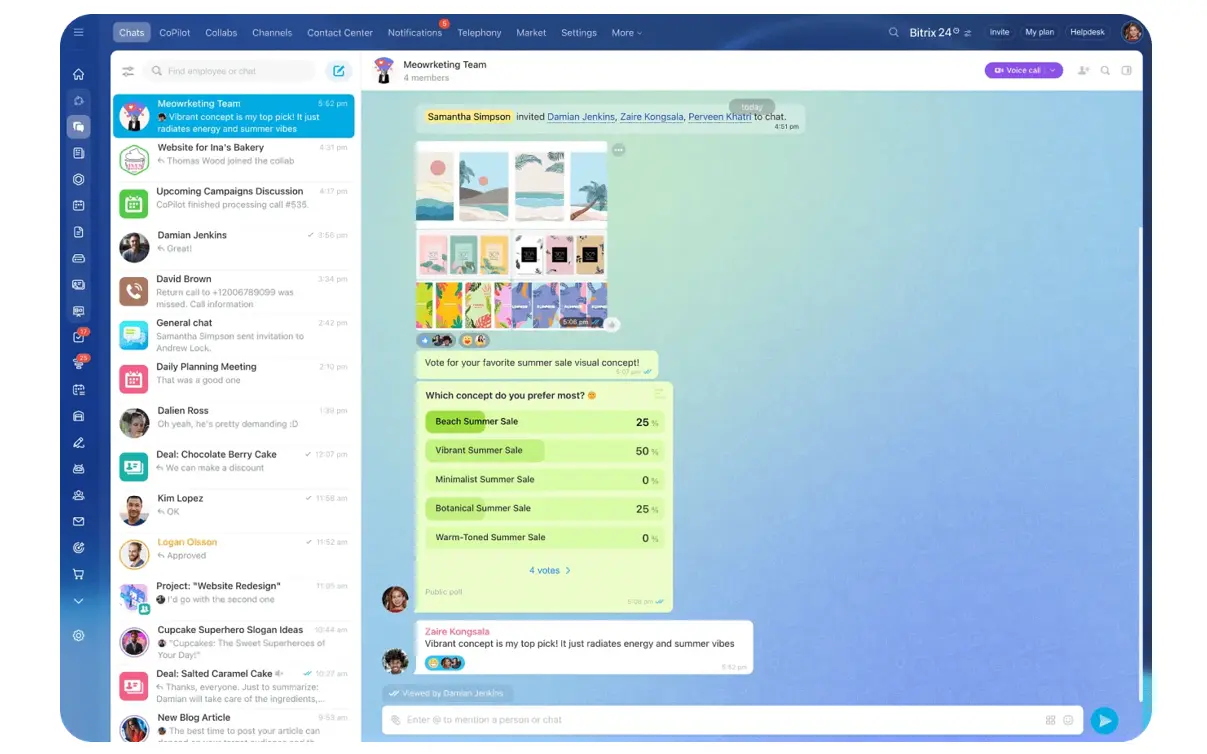
Once project delivery after sales close begins, both the sales team and the delivery team need visibility into progress. The sales rep still owns the relationship. If a client calls their rep to ask about a delayed deliverable and the rep has no idea what's happening, the relationship takes a hit.
A shared dashboard solves this and avoids meeting overhead. It shows the current status of each active project, upcoming milestones, blockers, and any escalations. The sales team doesn't need to manage the project - they just need enough visibility to answer client questions confidently.
This dashboard also gives leadership a view into the health of the service delivery handoff across all active clients. If handoffs are consistently stalling at a specific step - say, the kickoff call keeps getting delayed - that pattern becomes visible before it turns into a client retention problem.
5. Escalation Triggers for Stalled Deliverables
Not every handoff goes smoothly. Clients don't respond to scheduling requests. Internal teams miss their task deadlines. Scope questions come up that nobody anticipated. A good service delivery process accounts for these situations with built-in escalation triggers.
An escalation trigger fires when a predefined condition is met: no kickoff call scheduled within 48 hours of close, the handoff document still incomplete after 24 hours, or the first deliverable misses its target date. The trigger notifies a specific person - a team lead, an account manager, or the original sales rep - who is responsible for unblocking the situation.
Without escalation triggers, stalled handoffs sit quietly until the client complains. By then, recovery is harder and more expensive than preventing the issue in the first place.
6. A Post-Handoff Feedback Loop
The handoff checklist template should include a feedback step. Two weeks after the handoff, the delivery lead provides structured feedback to the sales team: Was the handoff document accurate? Were there surprises? Did the client's expectations match what was documented?
This feedback loop closes the process and turns each handoff into a learning opportunity. Sales reps adjust their documentation habits, while templates are refined and recurring gaps are addressed before they become patterns.
No service delivery handoff is complete without a mechanism that feeds lessons back to the team that started the conversation. If it’s missing, the same mistakes repeat across new clients.
Handoff Approaches Compared
|
Component |
Ad-Hoc Handoff |
Documented Handoff |
Automated Handoff |
|---|---|---|---|
|
Handoff trigger |
Manual (someone remembers) |
Manual (checklist exists) |
Automatic (stage change triggers workflow) |
|
Client context transfer |
Email or verbal |
Standardized template |
Template auto-populated from CRM fields |
|
Task creation |
Manual, often delayed |
Checklist-driven, still manual |
Auto-generated with owners and deadlines |
|
Delivery team visibility |
Low (asks sales rep) |
Medium (reads document) |
High (shared dashboard + notifications) |
|
Escalation handling |
Reactive (client complains) |
Semi-structured |
Trigger-based with automatic alerts |
|
Feedback to sales |
Rare |
Occasional |
Built into workflow |
|
Time to first deliverable |
Variable, often delayed |
Shorter, somewhat consistent |
Predictable and repeatable |
The jump from ad-hoc to documented is significant. The jump from documented to automated is where the service delivery handoff becomes truly scalable. Most organizations should aim to reach the documented stage first and automate incrementally based on where delays actually occur.
When Service Delivery Handoffs Fall Short (and How to Adapt Them)
A standardized service delivery handoff works best for businesses with repeatable delivery models - SaaS onboarding, recurring service engagements, agency retainers, and consulting packages with defined scopes.
It works less well in situations where every engagement is entirely custom. If the scope, team, and timeline are negotiated from scratch for each deal, a rigid template creates friction instead of clarity. For highly custom work, the template should be lighter - focused on capturing context and expectations without prescribing a fixed set of delivery steps.
Large enterprise deals introduce another complication. The sales cycle may involve multiple stakeholders, procurement teams, legal reviews, and phased rollouts. A single handoff event doesn't capture the complexity. These deals often require a phased transition plan with multiple handoff points rather than a single clean transfer.
Geographic and timezone differences also affect the process. When sales and delivery teams operate in different regions, asynchronous communication becomes critical. The handoff document needs to carry more context because the "quick call to clarify" option may not be available.
Finally, the handoff process can create friction if it adds too much overhead to the sales team's closing workflow. If filling out the handoff template takes 45 minutes and the rep is juggling multiple deals, compliance will drop. The balance between thoroughness and usability determines whether the process sticks or gets bypassed.
Build a Service Delivery Handoff That Keeps Clients Connected From Day One
Turning a service delivery handoff into a repeatable process requires more than templates and checklists. It requires connected systems that carry context from sales to delivery automatically.
Bitrix24 bridges the gap between CRM and project delivery, so the service delivery handoff happens without manual coordination. When a deal stage changes, automated workflows create projects, assign tasks, notify delivery teams, and populate structured handoff documents directly from CRM data. Sales and delivery teams share the same platform, which means client context stays in one place - not scattered across tools. Task dependencies, shared dashboards, escalation triggers that flag delays, and built-in communication threads keep the client transition from sales to delivery visible and accountable from the first task to the final deliverable, while feedback loops help teams continuously improve handoff quality.
Try Bitrix24 today and automate your service delivery handoff from CRM to project delivery, ensuring client context is preserved across every step.
Upgrade Your Service Delivery
With Bitrix24, streamline your service delivery handoff. Ensure seamless transition from sales to operations, preserving vital context and client trust through every stage.
Get Started NowFAQ
What is a service delivery handoff, and why does it matter after a deal closes?
A service delivery handoff is the structured transfer of client context, scope, timelines, and ownership from a sales team to an operations or delivery team once a deal closes. It matters because the information accumulated during the sales cycle - client expectations, verbal commitments, pricing nuances, risk signals - rarely transfers automatically when the CRM stage changes. Without a defined handoff, delivery teams start from incomplete information, which delays kickoffs and erodes client confidence during the most sensitive phase of the relationship.
How do you prevent context loss in a sales-to-delivery handoff?
Preventing context loss in a sales-to-delivery handoff requires three components working together: a standardized handoff document that the sales rep fills out before the deal fully closes, automatic task creation that triggers the moment the CRM stage changes, and a shared communication thread where the client sees continuity between their sales contact and the delivery team. The combination of structured documentation, automation, and visible transitions keeps critical details from falling through the cracks.
What should an account handoff template include?
An account handoff template should include the client's primary contact and communication preferences, the scope of what was sold with any deviations from standard offerings, the timeline committed during the sales process, known risks or sensitivities, billing terms and payment schedule, verbal commitments not captured in the contract, and the names of all internal stakeholders involved on both the sales and delivery sides. The template works best when it uses a consistent format across all deals, so delivery teams always know where to find each piece of information.
When should the handoff process start - before or after the deal closes?
The service delivery handoff process should begin before the deal fully closes. The most effective teams start populating the handoff document during the final proposal stage, when scope details are freshest, and the sales rep is still actively engaged with the client. Waiting until after the deal is marked "closed-won" introduces a delay as the rep has already mentally moved on to the next opportunity, and details begin to fade. Pre-closing preparation means the delivery team can begin onboarding tasks within hours of the deal closing, not days.
How does a closed-won workflow differ from a standard CRM pipeline?
A closed-won workflow picks up where a standard CRM pipeline ends. The CRM pipeline tracks a deal from lead to close - stages like qualification, proposal, negotiation, and won. The closed-won workflow handles what happens next: project creation, task assignment, document generation, stakeholder notifications, and delivery kickoff. Most CRM platforms stop at the pipeline. An operational approach extends the workflow into delivery so that the stage change triggers coordinated action rather than just a status update.
What are common signs that a client onboarding handoff is failing?
Common signs that a client onboarding handoff is failing include: clients repeating information they already shared with the sales team, kickoff calls happening more than a week after the deal closes, delivery teams discovering scope commitments they were not told about, sales reps being pulled back into accounts to answer questions the delivery team should already have, and a noticeable dip in client sentiment during the first 30 days of the engagement. Any of these signals point to a structural gap in the handoff process instead of an individual performance issue.
Can the service delivery handoff be automated for every type of business?
Automating the service delivery handoff works best for businesses with repeatable delivery models - SaaS onboarding, agency retainers, managed services, and consulting engagements with defined scopes. For businesses where every project is completely custom, full automation is not realistic. The practical approach is to automate the repeatable infrastructure (task creation, notifications, document generation, and status dashboards) while leaving scope-specific decisions to human judgment. Even partial automation reduces the delay and inconsistency that come with purely manual handoffs.
How long should a project delivery handoff take from closed-won to kickoff?
Project delivery after a sales close should reach the kickoff stage within two to five business days for standard engagements. The actual timeline depends on deal complexity, client availability, and internal capacity. Simpler deals with defined scopes can kick off within 24 to 48 hours when the handoff is automated. Complex enterprise deals with multiple stakeholders, and phased rollouts may require a longer transition period with multiple handoff checkpoints. The benchmark to aim for is consistent time-to-kickoff across similar deal types, not a single universal number.